Why Take a Local Jeep Tour in Hanoi?
Hanoi is easy to visit but much harder to truly understand.
You can walk around the Old Quarter, photograph the Hanoi Opera House, visit Hoan Kiem Lake, stop at a famous café, and check several landmarks off your itinerary. But these places only reveal one layer of the city.
To discover another Hanoi—the Hanoi of small neighborhood markets, hidden lanes, family businesses, local food stalls, lakeside communities, riverside farmland, and everyday street life—a local Jeep tour can be a much more immersive way to explore.
A local guide does not simply take you from one attraction to another. They can explain what you are seeing, introduce you to local food and customs, and show you parts of Hanoi that are easy to miss when traveling independently.
Current Hanoi Jeep itineraries combine major landmarks with hidden streets, local markets, Banana Island, Long Bien Bridge, West Lake, Train Street, and local food, making the experience broader than a conventional sightseeing tour.
What Makes a Local Jeep Tour Different?
The biggest difference is perspective.
A standard sightseeing tour is usually designed around famous attractions.
A local Jeep tour is designed around the city itself.
You still see important landmarks, but you also travel through neighborhoods where people actually live. You may pass small workshops, local markets, schools, homes, cafés, food stalls, gardens, and narrow lanes.
The Jeep allows the route to move between these environments much more efficiently than a walking tour.
Instead of seeing Hanoi as a collection of attractions, you begin to see it as a living city.
See Hanoi Beyond the Tourist Trail
One of the strongest reasons to choose a local Jeep tour is the opportunity to go beyond the most obvious tourist areas.
Hanoi’s Old Quarter is fascinating, but it is only one part of the capital.
A local Jeep itinerary can take you from the Old Quarter into smaller streets and neighborhoods before continuing toward Long Bien Bridge, the Red River, Banana Island, West Lake, and other parts of the city.
This creates a much more varied experience.
One minute you are surrounded by historic buildings and busy traffic.
A few minutes later, you may be traveling beside gardens and farmland.
That contrast is one of the things that makes Hanoi so interesting.
Travel Through Hanoi Like a Local
You do not have to drive the Jeep yourself.
You simply sit back and observe the city while an experienced driver handles the traffic and a local guide explains what you are seeing.
That means you can concentrate on the experience rather than navigation.
Hanoi traffic can look chaotic to first-time visitors, particularly around the Old Quarter. Having a local driver who understands the streets allows you to explore more comfortably while still experiencing the energy of the city from an open-air vehicle.
Discover Hidden Streets
Some of Hanoi’s most interesting places do not have a famous landmark.
They might be a tiny lane where residents eat breakfast.
A neighborhood market where local families shop.
A small café hidden behind an ordinary-looking entrance.
A traditional house tucked between modern buildings.
A street where generations of the same family have operated a small business.
These are the details that give Hanoi its personality.
Current local Jeep itineraries specifically emphasize narrow pathways, hidden lanes, local homes, schools, markets, and lesser-known trading areas.
Understand Hanoi Through Local Stories
A landmark becomes more interesting when you know its story.
Long Bien Bridge is not simply an old bridge.
Train Street is not simply a place for photographs.
Banana Island is not simply a green area near the city.
The Old Quarter is not simply a collection of narrow streets.
A local guide can connect these places with Hanoi’s history, development, culture, and everyday life.
That storytelling is one of the biggest differences between traveling through a city and actually learning about it.
Explore Long Bien Bridge
Long Bien Bridge is one of the most recognizable structures in Hanoi.
A local Jeep tour can take you beyond the central streets and across or around this historic bridge, giving you views toward the Red River and surrounding areas.
The experience changes depending on the time of day.
In the morning, you can see the river landscape and surrounding communities.
In the afternoon, the changing light creates excellent photography conditions.
At sunset, the bridge becomes particularly atmospheric.
And at night, the surrounding city lights create an entirely different mood.
Discover Banana Island
One of the more surprising experiences on a local Hanoi Jeep tour is Banana Island.
Located within the Red River area, it provides an unexpected contrast to central Hanoi.
Instead of dense buildings and traffic, you encounter gardens, farmland, dirt paths, banana trees, and a quieter environment.
Current Jeep itineraries use Banana Island as a way to introduce travelers to Hanoi’s agricultural side.
This is something many first-time visitors do not expect to find inside the capital.
See the Red River From Another Perspective
The Red River has played an important role in Hanoi’s development.
Yet many visitors spend their entire trip without really experiencing the river environment.
A Jeep tour can take you toward riverside areas and Long Bien Bridge, where the dense urban landscape gives way to gardens, farmland, and open spaces.
It provides a useful reminder that Hanoi is not only a modern capital.
The river remains part of the city’s geography and everyday life.
Explore West Lake
West Lake offers another side of Hanoi.
The atmosphere around the lake is generally more spacious and relaxed than the narrow Old Quarter.
You can see cafés, restaurants, residential streets, temples, lakeside roads, and local neighborhoods.
A Jeep is particularly convenient here because the lake is large and its surrounding areas are spread out.
Instead of walking along one small section, you can experience several different parts of the area.
Experience Train Street Responsibly
Train Street has become one of Hanoi’s most recognizable attractions.
But the interesting part is not simply the railway.
It is the way residential life has developed around the railway corridor.
Local guides can explain the area’s history and help visitors understand the environment while following current access and safety rules.
A responsible tour should never encourage travelers to stand on active railway tracks for photographs.
The experience should be about understanding this unusual part of Hanoi, not taking unnecessary risks.
Visit Local Markets
Markets reveal a side of Hanoi that museums cannot.
You can see fresh vegetables, herbs, fruit, meat, seafood, household goods, snacks, and other products used by local families.
You can also observe how vendors interact with customers and how food moves from market stalls into neighborhood kitchens.
Current Jeep routes include local markets as part of their cultural exploration.
For travelers interested in everyday life, this can be more revealing than another famous monument.
Discover Hanoi Through Food
Food is an essential part of local culture.
A local Jeep tour can introduce you to Vietnamese dishes while explaining where and how people eat them.
Depending on the itinerary, food experiences may include a local meal, street snacks, Vietnamese Egg Coffee, or other local specialties.
This is particularly valuable for first-time visitors.
You may recognize Phở or Bún Chả from international restaurants, but eating them in Hanoi while learning about local eating habits is a completely different experience.
Taste Vietnamese Egg Coffee
Egg Coffee is one of Hanoi’s most distinctive drinks.
Strong Vietnamese coffee is combined with a creamy egg mixture to create a drink that sits somewhere between coffee and dessert.
Ending a Jeep tour with Egg Coffee gives travelers a relaxed opportunity to sit down and talk with their guide after several hours of exploring.
Current Hanoi Jeep itineraries include Egg Coffee or Mango and Caramel Pudding as possible final treats.
Learn About Everyday Hanoi
The most valuable part of a local tour may be the things that are not written on the itinerary.
Your guide can explain why people sit on tiny plastic stools to eat.
Why homes often open directly onto the street.
Why certain streets specialize in particular products.
How Hanoi families use their homes as businesses.
Why certain foods are associated with particular times of day.
How Hanoi has changed over the decades.
These details make the city easier to understand.
Why an Open-Air Jeep Makes a Difference
A conventional vehicle creates a barrier between you and the city.
An open-air Jeep does not.
You hear the traffic.
You smell street food.
You feel the evening breeze.
You can look directly into side streets.
You can photograph architecture without shooting through tinted glass.
You experience the city at street level.
That sensory connection is one of the strongest reasons to choose a Jeep rather than a standard sightseeing vehicle.
A Jeep Tour Covers More Ground Than Walking
Hanoi is a city where walking is rewarding, particularly in the Old Quarter.
But walking between widely separated areas can take a lot of time.
A Jeep allows you to connect the Old Quarter, French Quarter, Long Bien Bridge, Red River, Banana Island, West Lake, Train Street, and other neighborhoods within one itinerary.
This makes it particularly useful for travelers with limited time.
Instead of spending four hours in one small area, you can experience several different faces of Hanoi.
It Is More Than a Sightseeing Tour
A good local Jeep tour should not feel like a checklist.
The objective is not simply:
“Here is the Opera House.”
“Here is Long Bien Bridge.”
“Here is Train Street.”
The more interesting question is:
Why do these places matter?
What happened here?
Who lives here?
How has this neighborhood changed?
What do locals eat?
How does the area fit into Hanoi’s wider story?
That is where a local guide adds real value.
Local Guides Know the Small Details
Online travel guides can tell you where a landmark is.
A local guide can tell you what is happening around it.
They may know which neighborhood is famous for a particular food, where a local market begins early in the morning, which street is quieter for photography, or how a particular building has changed over time.
These details are difficult to discover through a map alone.
Why Choose a Women-Led Local Jeep Tour?
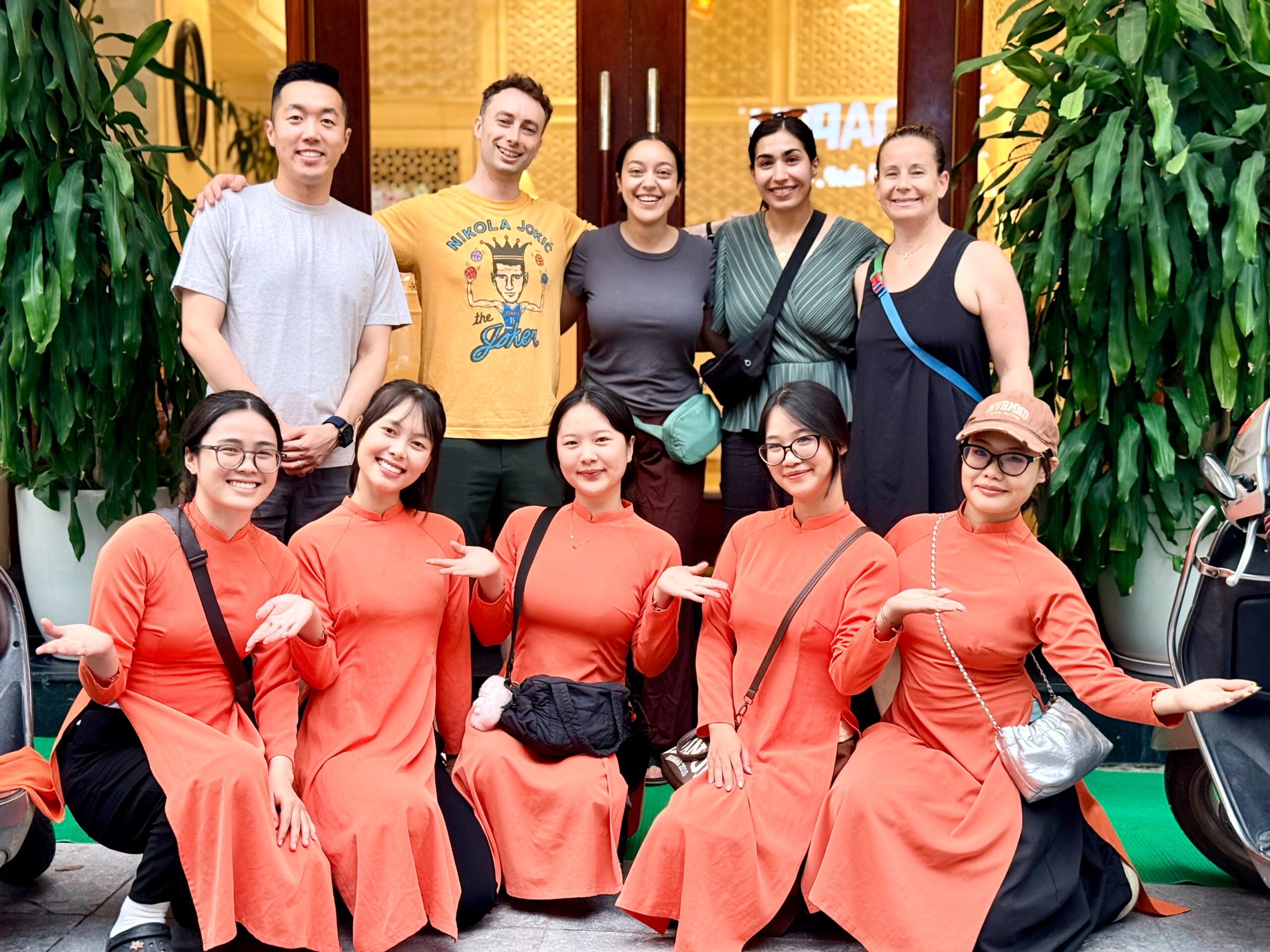
A Hanoi Jeep Tour Led by Women offers a particularly personal approach to exploring the city.
Local female guides can share Hanoi through their own experiences, family stories, knowledge of neighborhoods, food traditions, and everyday life.
The experience is not women-only.
Couples, families, solo travelers, and mixed groups can join.
The difference is that the tour is guided by local women who know Hanoi personally.
The current Hanoi Jeep operation describes its tours as women-led and emphasizes professional female guides, experienced drivers, hidden local areas, food, culture, and connections with Hanoi residents.
Local Doesn’t Mean Less Comfortable
Some travelers assume that going “local” means giving up comfort.
That does not have to be the case.
The current Jeep tours use Vietnam People’s Army-style open-air Jeeps, professional guides, experienced drivers, and hotel pickup and drop-off around Hanoi’s Old Quarter.
The Jeeps also have retractable roofs, and rain ponchos are provided when necessary.
So you can experience local Hanoi without having to organize transportation, navigation, restaurants, and logistics yourself.
Local Jeep Tour or Private Tour?
A group Jeep tour is a good option for travelers who enjoy a social atmosphere and want a more affordable experience.
A private Jeep tour is better if you want greater flexibility.
You can spend more time photographing a particular location, ask your guide more questions, discuss food preferences, or adjust the pace to suit your group.
Current published pricing for the 4.5-hour women-led city Jeep experience is approximately US$50 per person for group tours and US$80 per person for private tours, although rates can vary by itinerary and group size.
Is a Local Jeep Tour Good for First-Time Visitors?
Yes.
In fact, first-time visitors may benefit the most.
You get an overview of Hanoi’s geography, history, food, architecture, neighborhoods, and transportation within a single experience.
Afterward, you will have a better idea of where you want to return independently.
You might discover a neighborhood you want to explore on foot the next day.
You might find a food you want to try again.
You might want to return to West Lake at sunset.
The Jeep tour becomes an introduction rather than the entire Hanoi experience.
Is It Good for Returning Visitors?
Absolutely.
Returning travelers often have already seen Hoan Kiem Lake, the Old Quarter, the Temple of Literature, and other major attractions.
A local Jeep tour provides a reason to look at Hanoi differently.
Instead of repeating the same sightseeing route, you can explore hidden neighborhoods, markets, riverside areas, Banana Island, local food, and quieter parts of the city.
Is It Suitable for Families?
The Jeep format can work particularly well for families.
Children usually enjoy the novelty of riding in an open-air Jeep, while parents can enjoy the historical and cultural storytelling.
Because transportation connects the different stops, families do not have to walk continuously between attractions.
Private tours also provide additional flexibility for families with younger children.
Is It Suitable for Couples?
A private Jeep tour can be an excellent couple’s experience.
You can explore Hanoi together, stop for photographs, discover local food, and enjoy the city without having to follow a large group.
An evening departure can add another dimension, particularly around West Lake, Long Bien Bridge, and Hanoi’s illuminated streets.
Is It Good for Photographers?
Very much so.
The Jeep format gives you constantly changing subjects.
You can photograph:
Old Quarter architecture.
French colonial buildings.
Street vendors.
Markets.
Long Bien Bridge.
The Red River.
Banana Island.
West Lake.
Train Street.
Local homes.
Food preparation.
Evening street scenes.
Because the vehicle is open-air, you have fewer obstacles between your camera and the street.
What Should You Wear?
Comfortable clothing and shoes are best.
You will spend much of the tour seated in the Jeep, but you will get out at different locations.
Light clothing works well in warmer months.
During Hanoi’s cooler winter period, a light jacket or long-sleeved top is useful.
Sunglasses and sunscreen are also helpful for daytime departures.
What Happens If It Rains?
Current Hanoi Jeep Tours operate in rain or shine and provide rain ponchos. The Jeeps have retractable roofs that can be opened or closed depending on conditions.
Light rain can even create an interesting atmosphere in Hanoi.
However, severe weather may require itinerary adjustments for safety.
How Long Should a Local Jeep Tour Be?
A half-day experience is usually enough for a first introduction.
The current city Jeep itinerary lasts approximately 4.5 hours, with morning, afternoon, and evening departures.
For travelers who want to go beyond the city, full-day Jeep experiences can extend into Hanoi’s countryside.
Current full-day options include destinations such as Co Loa and Bat Trang Ceramic Village, with an approximately eight-hour itinerary.
What Makes the Countryside Jeep Experience Different?
Hanoi’s countryside begins surprisingly close to the urban center.
A full-day local Jeep experience can take you along the Red River and into traditional villages, where the landscape changes from dense city streets to farmland, gardens, old village gates, temples, and family homes.
Current Co Loa and Bat Trang itineraries include visits to traditional villages, local families, historic sites, and the centuries-old pottery tradition of Bat Trang.
This is an excellent option for travelers who have already explored central Hanoi.
Why Local Knowledge Matters
You can rent transportation and explore Hanoi independently.
But navigation is only one part of travel.
The difficult part is knowing what you are looking at.
A local guide provides context.
That context turns an ordinary street into a story.
It turns a food stall into a cultural experience.
It turns a bridge into a piece of history.
It turns a neighborhood into somewhere you remember.
The Real Value of a Local Jeep Tour
The value is not simply transportation.
It is not simply the Jeep.
It is not simply the number of landmarks included.
The real value is access to a different version of Hanoi.
You are given the opportunity to move beyond the obvious tourist route and see how the city actually functions.
That can be difficult to reproduce independently, particularly on a short visit.
Final Thoughts
So, why take a local Jeep tour in Hanoi?
Because Hanoi is much bigger and more interesting than its famous attractions.
A local Jeep tour connects the city’s different layers.
You can begin among the historic streets of the Old Quarter, pass French colonial architecture, explore hidden lanes and local markets, cross Long Bien Bridge, discover the green landscapes of Banana Island, travel beside West Lake, visit Train Street, and finish with Vietnamese food or Egg Coffee.
More importantly, you experience these places with someone who knows Hanoi from the inside.
You are not simply looking at the city.
You are learning how the city lives.
That is what makes a local Jeep tour different from ordinary sightseeing.
Experience Hanoi With Local Women Guides
Hanoi Jeep Tours – Led by Women
Address: 91 Tho Nhuom Street, Hoan Kiem District, Hanoi, Vietnam
WhatsApp: +84 982 416 518 / +84 981 090 989
Email: toursjeephanoi@gmail.com
Hanoi Jeep Tours – Official Website
Explore Hanoi beyond the tourist trail—through its streets, food, neighborhoods, history, and local stories from the back of an open-air Jeep.