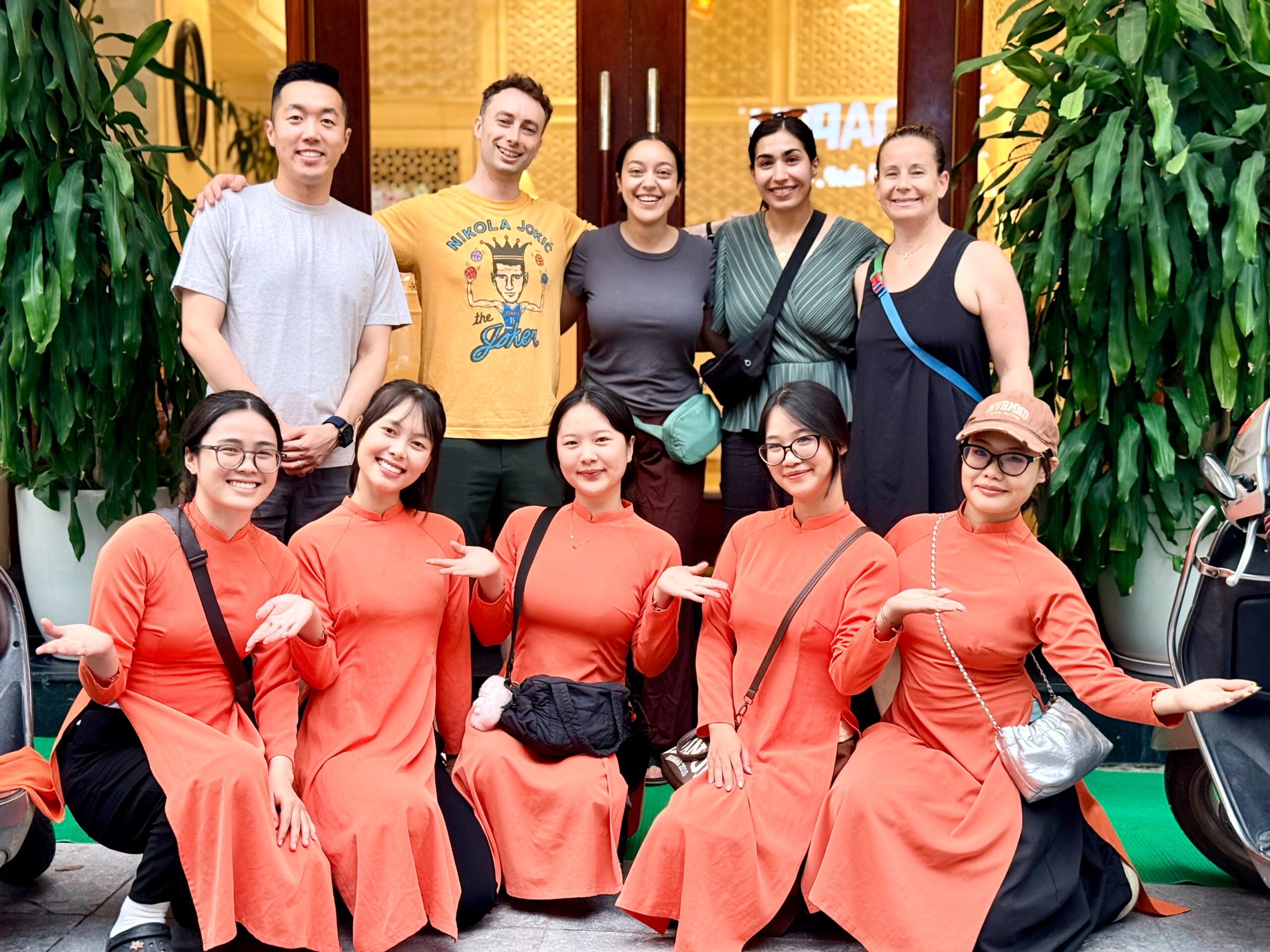
Hanoi Jeep Food Tour: Discover Hanoi’s Best Street Food
Hanoi is a city where you can learn as much about local life from a bowl of noodles as from a historic monument.
The best street food is often found away from formal restaurants: inside narrow lanes, beside busy markets, under small awnings, or at tiny family-run stalls where the menu may consist of only one or two specialties. Hanoi’s food culture is deeply connected to these streets, with dishes such as Phở, Bún Chả, Bánh Cuốn, Bánh Mì, Chả Cá, Bún Riêu, and Egg Coffee forming an essential part of the city’s identity.
A Hanoi Jeep Food Tour adds another dimension to this experience. Instead of spending the entire evening walking between restaurants in one neighborhood, you travel through Hanoi in an open-air Jeep, connecting different food districts, hidden streets, markets, historic areas, and local neighborhoods.
The result is not simply a food tour.
It is a moving journey through the flavors and everyday life of Hanoi.
Why Take a Jeep Food Tour in Hanoi?
Hanoi’s street food scene is enormous.
You could spend days exploring restaurants and still discover something new.
The challenge for first-time visitors is knowing where to go, what to order, how much to eat, and which dishes are genuinely associated with Hanoi.
A local Jeep Food Tour solves much of this problem.
Instead of researching dozens of restaurants yourself, you travel with a local guide who can introduce you to different dishes and explain the traditions behind them.
The Jeep also allows you to cover more ground.
One moment you might be in the Old Quarter, surrounded by narrow streets and old shophouses. A short time later, you can be crossing Long Bien Bridge, traveling toward the Red River, exploring a local market, or arriving at another neighborhood for your next tasting.
Hanoi Street Food Is More Than a Meal
The most interesting thing about Hanoi food is that it is closely connected to daily life.
People eat breakfast before work, gather around sidewalk tables for lunch, stop for snacks during the afternoon, meet friends for coffee, and spend evenings around food stalls.
A street-food tour therefore gives you an opportunity to observe Hanoi’s social culture.
You see how dishes are prepared, how locals order them, how ingredients are displayed, and how small food businesses operate.
Recent 2026 food guides continue to describe the Old Quarter as one of Hanoi’s densest areas for traditional street food, with specific streets becoming associated with particular dishes and culinary specialties.
Start With Hanoi’s Most Famous Dish: Phở
For many international visitors, Phở Bò is the first Vietnamese dish they want to try.
Hanoi’s version centers on a fragrant broth, rice noodles, beef, herbs, and condiments.
But the experience of eating Phở in Hanoi is different from ordering it in a restaurant abroad.
The atmosphere matters.
You sit close to the cooking area, watch the noodles and meat being prepared, smell the broth, and see locals eating around you.
For food lovers, this provides an opportunity to pay attention to the subtle differences between broths, herbs, meat cuts, and preparation methods.
Bún Chả: The Hanoi Classic
If Phở is Vietnam’s internationally famous noodle soup, Bún Chả is one of the dishes most strongly associated with Hanoi.
Grilled pork patties and slices of pork are served with rice noodles, herbs, vegetables, and a sweet-sour dipping sauce.
The smoky aroma from charcoal grilling is part of the attraction.
Bún Chả is generally considered a daytime specialty, making it especially suitable for lunch-focused food itineraries.
A Jeep Food Tour can introduce you to Bún Chả while also showing you the neighborhoods beyond the restaurant itself.
Bánh Mì: Hanoi’s Quick Street-Food Favorite
Few Vietnamese foods are easier to enjoy on the move than Bánh Mì.
A crisp baguette is filled with combinations of pâté, meats, pickled vegetables, herbs, cucumber, chili, and sauces.
The baguette reflects the historical influence of French cuisine, while the fillings are distinctly Vietnamese.
Current Hanoi food guides continue to place Bánh Mì among the city’s essential street foods, with Old Quarter vendors particularly popular among visitors.
Bánh Cuốn: Delicate and Fresh
Bánh Cuốn offers a completely different texture.
Thin steamed rice sheets are rolled around fillings such as minced pork and wood-ear mushrooms and served with dipping sauce, herbs, and fried shallots.
Watching the sheets being made is part of the attraction.
The cook spreads the rice batter across a steaming surface, removes the delicate sheet, adds the filling, and rolls it before serving.
It is one of those Hanoi dishes where the preparation itself becomes part of the sightseeing experience.
Chả Cá: Hanoi’s Signature Fish Dish
Food lovers looking for something particularly associated with Hanoi should consider Chả Cá.
Fish is cooked with turmeric and aromatic herbs, especially dill and spring onions, creating a distinctive flavor and presentation.
The dish has a long association with Hanoi and remains one of the city’s best-known culinary specialties.
Because Chả Cá is more substantial than many street snacks, it works particularly well as one of the main food stops rather than simply a quick tasting.
Phở Cuốn Around Trúc Bạch
Phở Cuốn is a lighter alternative to traditional Phở.
Instead of serving noodles in broth, wide rice sheets are wrapped around beef, herbs, and vegetables and accompanied by dipping sauce.
The dish is particularly associated with the Trúc Bạch area, making it an excellent food stop to combine with sightseeing around West Lake and nearby neighborhoods.
Bún Riêu for Something More Adventurous
Bún Riêu is a tomato-based noodle soup with crab-based ingredients and a distinctive sweet-and-sour balance.
Depending on the version, you may also encounter tofu, snails, herbs, and other toppings.
It is a good example of why a local guide can be useful.
A traveler unfamiliar with Vietnamese cuisine might overlook Bún Riêu when faced with a long menu, while a local guide can explain what it is and how to enjoy it.
Bún Thang: A Taste of Traditional Hanoi
Bún Thang is less famous internationally but highly interesting for travelers who want to explore traditional Hanoi cuisine.
The dish combines rice vermicelli with ingredients such as shredded chicken, Vietnamese pork sausage, egg, herbs, and a delicate broth.
Its more refined character makes it very different from smoky Bún Chả or rich Phở.
It demonstrates the diversity of Hanoi cuisine rather than simply its most famous dishes.
Xôi: The Food of Everyday Hanoi
Xôi, or sticky rice, is a staple that can appear in many forms.
Savory versions can be topped with mung bean, fried shallots, chicken, pork, or other ingredients.
It is especially associated with breakfast and quick meals.
Because sticky rice is filling, it is best enjoyed in a small portion when you are planning to taste several dishes during the same tour.
Nem Rán and Crispy Street Snacks
Vietnamese fried spring rolls, commonly called Nem Rán in the north, are another easy addition to a food tour.
The crispy exterior contrasts with the softer filling inside.
They can be enjoyed alongside noodles or as a snack by themselves.
Other fried Hanoi snacks include Bánh Gối, Bánh Rán, and various grilled foods. Recent Hanoi food guides list these among the city’s broader street-food repertoire.
Bánh Tôm: Crispy Shrimp Cake
For seafood lovers, Bánh Tôm is worth discovering.
Shrimp is combined with batter and fried until crisp, creating a snack that is crunchy on the outside and tender inside.
It provides another texture to a food tour dominated by noodles, rice, and soups.
Bun Đậu Mắm Tôm: The Bold Choice
For adventurous eaters, Bún Đậu Mắm Tôm is one of the most memorable Hanoi experiences.
The dish combines rice vermicelli, fried tofu, herbs, and other ingredients with mắm tôm, a strongly fermented shrimp paste.
The aroma can be intense.
Some visitors love it immediately.
Others need time to become accustomed to it.
Either way, it is a genuine part of northern Vietnamese food culture and an excellent dish for travelers who want to move beyond familiar tourist favorites.
Hanoi’s Grilled Street Food
Once evening arrives, the smell of charcoal becomes one of the defining aromas of Hanoi.
Small grills appear beside sidewalks, cooking meat, seafood, vegetables, sausages, and skewers.
The experience is highly visual.
You see the smoke rising, hear the sizzling food, and watch the cook turn each item over the charcoal.
This is one reason an evening Jeep Food Tour can feel completely different from a daytime sightseeing tour.
Vietnamese Snails
For adventurous travelers, Ốc, or Vietnamese snail dishes, can provide another memorable stop.
Snails and shellfish may be steamed, grilled, stir-fried, or cooked with garlic, chili, lemongrass, tamarind, and other sauces.
Snail restaurants are particularly associated with casual evening dining.
They are not necessarily the first food international travelers choose themselves, which makes them an interesting addition to a guided culinary adventure.
Egg Coffee: Don’t Leave Hanoi Without Trying It
After several savory dishes, it is time for dessert.
Or perhaps coffee.
Or perhaps both.
Cà Phê Trứng, or Vietnamese Egg Coffee, combines strong Vietnamese coffee with a rich whipped egg mixture.
The result is creamy, sweet, and surprisingly dessert-like.
It has become one of Hanoi’s most recognizable culinary experiences, and current food guides continue to identify it as a must-try Hanoi specialty.
Ending a Jeep Food Tour with Egg Coffee is therefore almost a Hanoi tradition.
Chè for Dessert
Chè is a broad category of Vietnamese sweet desserts.
Depending on the preparation, it can contain beans, fruit, jelly, coconut milk, sticky rice, tapioca, or other sweet ingredients.
Because there are many varieties, it is worth asking your guide which version is popular locally on the day of your visit.
Coconut Coffee
Another popular Hanoi coffee experience is Coconut Coffee.
Strong Vietnamese coffee is combined with coconut-based ingredients, often creating a cold, creamy drink.
It is particularly refreshing in warmer weather.
For visitors who already know Vietnamese coffee, it is an easy way to explore another side of Hanoi’s café culture.
Bia Hơi and the Social Side of Hanoi
For adult travelers who drink alcohol, Bia Hơi offers a glimpse into Hanoi’s casual social culture.
Fresh draft beer is traditionally served in simple sidewalk settings where people gather around small tables.
But drinking is not necessary to enjoy a food tour.
You can choose coffee, tea, juice, or other non-alcoholic drinks while still experiencing the atmosphere.
Why the Old Quarter Is Perfect for a Food Tour
The Old Quarter is compact, dense, and filled with food businesses.
One street can contain several different culinary experiences.
The historical relationship between individual streets and particular trades has also contributed to the area’s specialized food culture.
But staying entirely within the Old Quarter would mean missing other important parts of Hanoi.
That is where the Jeep makes a difference.
Go Beyond the Old Quarter
A strong Hanoi Jeep Food Tour should not feel like a restaurant crawl.
It should use food as a reason to explore the wider city.
After tasting something in the Old Quarter, you might travel toward Trúc Bạch, West Lake, Long Bien Bridge, the Red River, or another neighborhood.
The journey between food stops becomes part of the experience.
Food and Long Bien Bridge
Long Bien Bridge provides a striking contrast to the narrow food streets.
You leave the dense Old Quarter behind and travel toward the Red River.
The historic bridge, railway, river, and surrounding communities create an entirely different landscape.
For photographers, it is also one of the most interesting transitions during a Jeep Food Tour.
You can go from a bowl of noodles in a crowded alley to an expansive riverside view within minutes.
Food and West Lake
West Lake offers another side of Hanoi’s culinary landscape.
The streets around the lake contain cafés, restaurants, local food businesses, and residential areas.
Traveling here later in the day can be particularly pleasant as temperatures fall and the city becomes more relaxed.
Discovering Food in Local Markets
Markets are an essential part of understanding Vietnamese cuisine.
You can see the raw ingredients that eventually become the dishes you eat.
Fresh herbs, vegetables, meat, seafood, fruit, noodles, spices, and prepared snacks all tell a story about how Vietnamese meals are built.
A market visit also makes the food tour more educational.
You are not only tasting the final product.
You are seeing the ingredients before they reach the kitchen.
Why a Jeep Is Better Than Walking for a Full Food Adventure
Walking is excellent in the Old Quarter.
But Hanoi is bigger than the Old Quarter.
A Jeep lets you connect several areas without exhausting yourself before the food even begins.
You can sit back, watch the streets, photograph the city, and travel between different culinary environments.
For visitors who want both food and sightseeing, this is one of the strongest advantages of a Jeep Food Tour.
How Many Dishes Can You Try?
More does not necessarily mean better.
A food tour that forces you to eat enormous portions can become uncomfortable.
The better approach is to taste a variety of smaller portions.
This lets you experience different cooking methods and flavors without becoming full after the first two stops.
A good food itinerary should have a rhythm: one substantial dish, something lighter, a snack, another specialty, and finally coffee or dessert.
What Makes Hanoi Street Food Different?
Northern Vietnamese cuisine generally emphasizes balance, fresh herbs, savory broths, grilled flavors, and relatively restrained sweetness compared with some southern styles.
That is why dishes such as Phở, Bún Chả, Bún Thang, Bánh Cuốn, and Chả Cá can taste noticeably different from Vietnamese food travelers may have encountered elsewhere.
The difference becomes easier to understand when you taste several dishes in one evening.
When Is the Best Time for a Hanoi Jeep Food Tour?
For a food-focused experience, evening is usually the most atmospheric option.
The streets become busier, grills appear, restaurants fill with customers, and Hanoi’s nightlife begins.
Current Hanoi Jeep food experiences commonly operate in the evening, while general Jeep tours also offer morning and afternoon departures. (toursjeephanoi.com)
If breakfast and morning food culture interest you, however, a morning tour can provide a completely different perspective.
How Long Should a Jeep Food Tour Last?
Around four hours is a comfortable length.
It gives you enough time to eat several dishes, travel between neighborhoods, stop for photographs, and enjoy the city without feeling rushed.
A current women-led Hanoi Jeep Food Tour is offered as an approximately four-hour experience, while the broader city Jeep itinerary runs around 4.5 hours. (toursjeephanoi.com)
Should You Book a Private Food Tour?
A private tour is particularly attractive to serious food lovers.
You can communicate your preferences before departure, discuss dishes with your guide, take more time for photography, and adjust the experience to your group.
It is also useful for families, couples, and travelers with dietary restrictions.
Vegetarian Travelers
Vegetarian food is widely available in Hanoi, but travelers should not assume that a dish is vegetarian simply because it contains vegetables.
Fish sauce, shrimp paste, eggs, and meat-based broth can appear in unexpected places.
If you are vegetarian or vegan, tell your tour operator before departure.
That allows food stops to be selected appropriately.
Travelers With Allergies
Food allergies require additional attention.
Common ingredients that may cause concerns include peanuts, shellfish, seafood, eggs, dairy, and fish-based sauces.
Tell your guide clearly about any allergy before the tour begins.
If your allergy is severe, you should also carry any necessary medication and take your own precautions.
How to Eat Like a Local
One of the easiest ways to improve your Hanoi food experience is to avoid trying to eat everything exactly like you would at home.
Sit where locals sit.
Watch how people combine herbs, noodles, meat, and sauce.
Ask your guide what should be mixed together and what should be eaten separately.
Vietnamese food often involves combining several components in one bite.
That balance of noodles, herbs, meat, sauce, pickles, and fresh vegetables is part of the experience.
Street Food Hygiene
Street food can be enjoyed safely when you make sensible choices.
Busy stalls with high turnover are generally preferable because ingredients are being used frequently.
Freshly cooked food is usually a better choice than food that has been sitting out for long periods.
Your guide can also help identify established local vendors and explain what is being prepared.
What Should You Wear?
Comfortable clothes and walking shoes are ideal.
Even though much of the tour takes place in the Jeep, you will get out several times.
For evening tours, bring a light layer during cooler months.
During hot weather, lightweight clothing is more comfortable, especially because Hanoi’s humidity can be high.
Food Photography on a Jeep Tour
Hanoi is an extraordinary city for food photography.
Steam rising from a noodle bowl.
Charcoal glowing beneath grilled pork.
A cook preparing Bánh Cuốn.
Fresh herbs stacked beside a food stall.
Coffee dripping slowly through a Vietnamese phin.
A tiny plastic table surrounded by local diners.
These details can tell the story of Hanoi better than a photograph of a famous monument.
The Jeep gives you additional opportunities to photograph the streets between food stops.
Why Local Guides Make a Difference
Knowing the name of a dish is not the same as understanding it.
A local guide can explain why a particular food is eaten at a certain time, how it is traditionally prepared, what ingredients matter, and how locals normally order it.
They can also help you move beyond the obvious tourist choices.
That local context can turn a simple dinner into a cultural experience.
Why Choose a Women-Led Hanoi Jeep Food Tour?
A Hanoi Jeep Food Tour Led by Women brings local female guides into the center of the experience.
The emphasis is on personal storytelling, local food, everyday Hanoi, neighborhood culture, and genuine interaction.
The tours are not restricted to women.
Couples, families, solo travelers, and mixed groups can all participate.
What makes the experience different is that the guides are local women who know the city through their own lives, families, communities, and experiences.
A Typical Food-Lover’s Journey
Imagine beginning your evening in the Old Quarter.
You start with a famous Hanoi dish before moving into a smaller neighborhood.
The Jeep continues through streets filled with cafés and local businesses.
You stop for another specialty.
Then you cross toward Long Bien Bridge and see the Red River.
After photographs and sightseeing, you return toward another food area.
A final snack is followed by Vietnamese Egg Coffee.
By the end of the evening, you have not simply eaten dinner.
You have traveled through several different versions of Hanoi.
Who Should Take a Hanoi Jeep Food Tour?
This experience is ideal for travelers who want more than conventional sightseeing.
It works particularly well for first-time visitors who want to combine food with an introduction to Hanoi.
It is also excellent for returning visitors who have already seen the major landmarks and now want to explore neighborhoods and local cuisine.
Couples can turn it into an evening adventure.
Families can share different dishes.
Solo travelers can enjoy the convenience of a local guide.
And serious food lovers can use it as an introduction before exploring Hanoi’s culinary scene independently.
Final Thoughts
The best way to discover Hanoi’s street food is not necessarily to find the restaurant with the longest online review list.
It is to understand the city behind the food.
A Hanoi Jeep Food Tour lets you do exactly that.
You can taste Phở in one neighborhood, Bún Chả in another, discover Bánh Cuốn being made by hand, try a bold bowl of Bún Đậu Mắm Tôm, explore local snacks, cross Long Bien Bridge, visit a market, see West Lake, and finish with Egg Coffee.
Hanoi’s famous foods are only the beginning.
The real experience is sitting beside the street, listening to the city, watching food being prepared, talking with a local guide, and discovering why these dishes remain such an important part of everyday life.
So come hungry—but don’t expect the food to be the only thing you remember.
The best Hanoi Jeep Food Tour doesn’t just take you to the best street food. It takes you to the streets that make that food meaningful.
Book a Hanoi Jeep Food Tour
Hanoi Jeep Tours – Led by Women
Address: 91 Tho Nhuom Street, Hoan Kiem District, Hanoi, Vietnam
WhatsApp: +84 982 416 518 / +84 981 090 989
Email: toursjeephanoi@gmail.com
Official Website: Hanoi Jeep Tours – Official Website
Explore Hanoi’s best street food, hidden neighborhoods, historic landmarks, and local culture from the back of an open-air Jeep with local women guides.